
 Argentina (USD)
 Estados Unidos (USD)
Journal
Studio notes
Technique, ideas and process behind the Aerocromías.
Glossary
Aerocromía
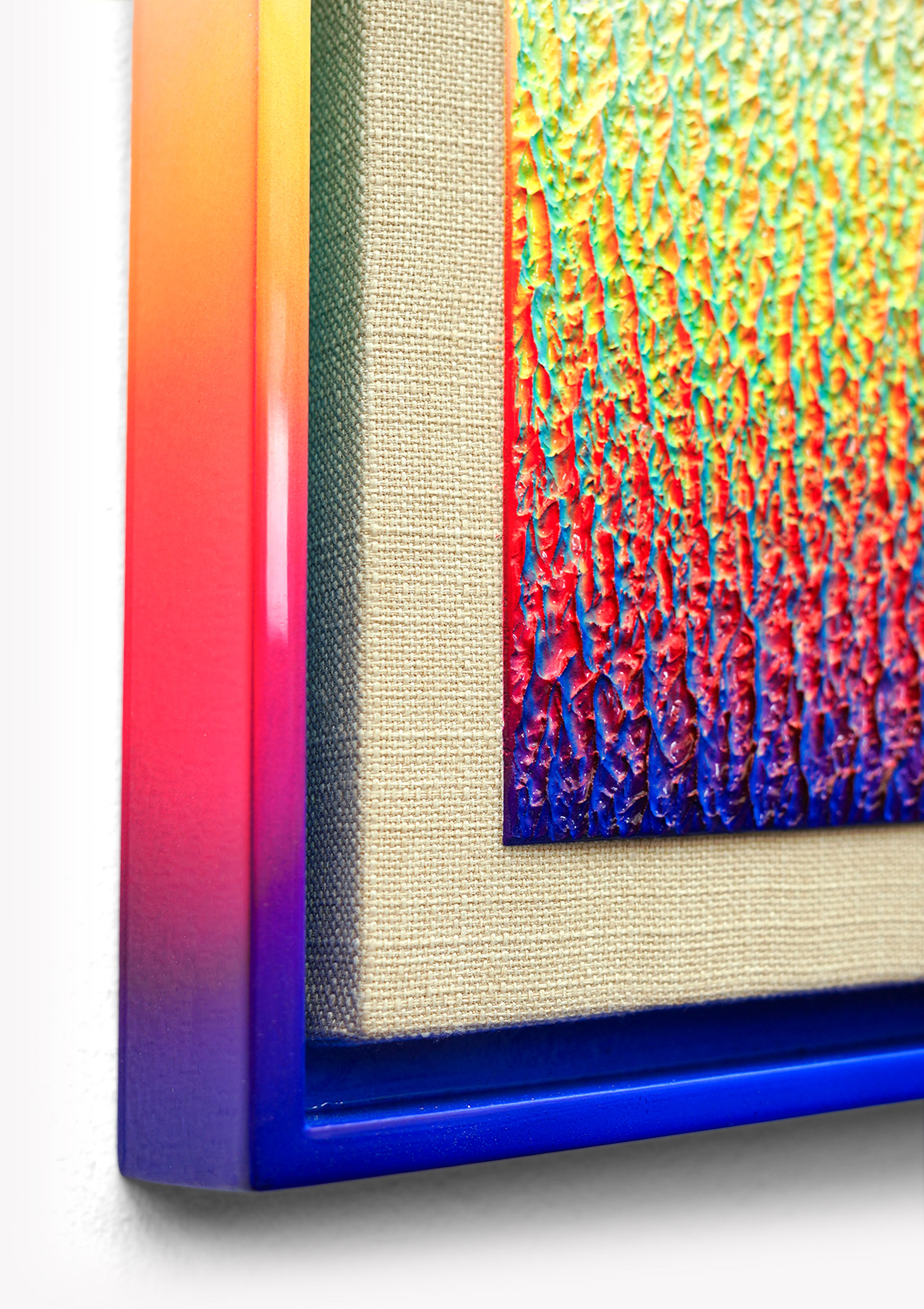
A term coined by Guido Llordi. It combines aero (air) and cromía (the quality of color): paint projected with air onto three-dimensional reliefs, creating a physical color that changes with the light and the position of the viewer.
Origin
The word was born from the need to name a process that traditional painting could not describe. “Aero” is the tool: air. Painting without touching the surface, the pigment settles like mist and follows the topography of the work. “Cromía” is the behavior of color: in an Aerocromía it is not static, it depends on the physics of light.
How it works
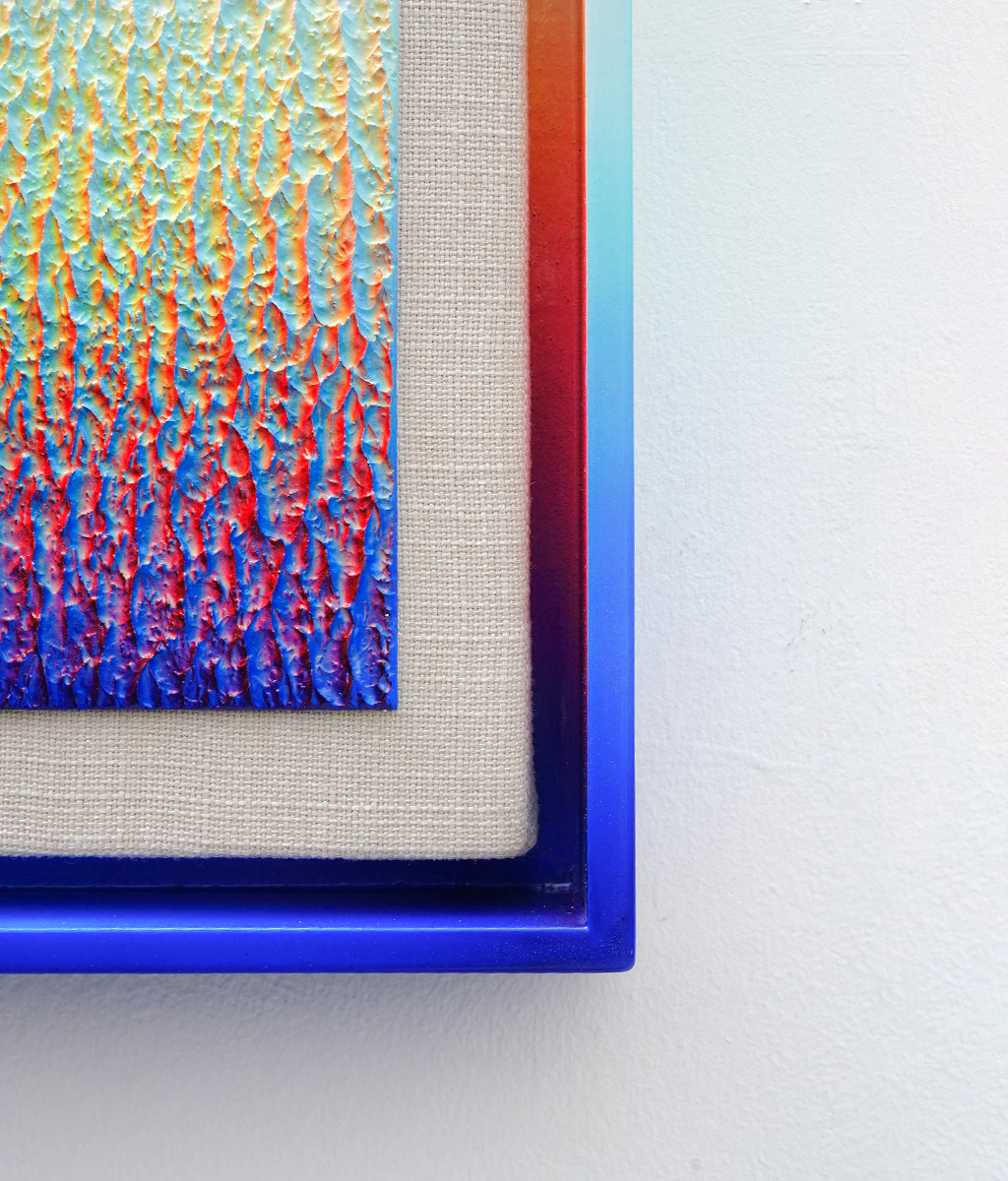
Projecting paint with air at specific angles onto a textured surface creates “slopes” of color. Seen from the front, the work presents a synthesis. As viewers move, they discover colors that were hidden in the shadow of the relief. The work needs someone to move in order to reveal itself.
Questions for the artist
“The viewer no longer looks: they play”
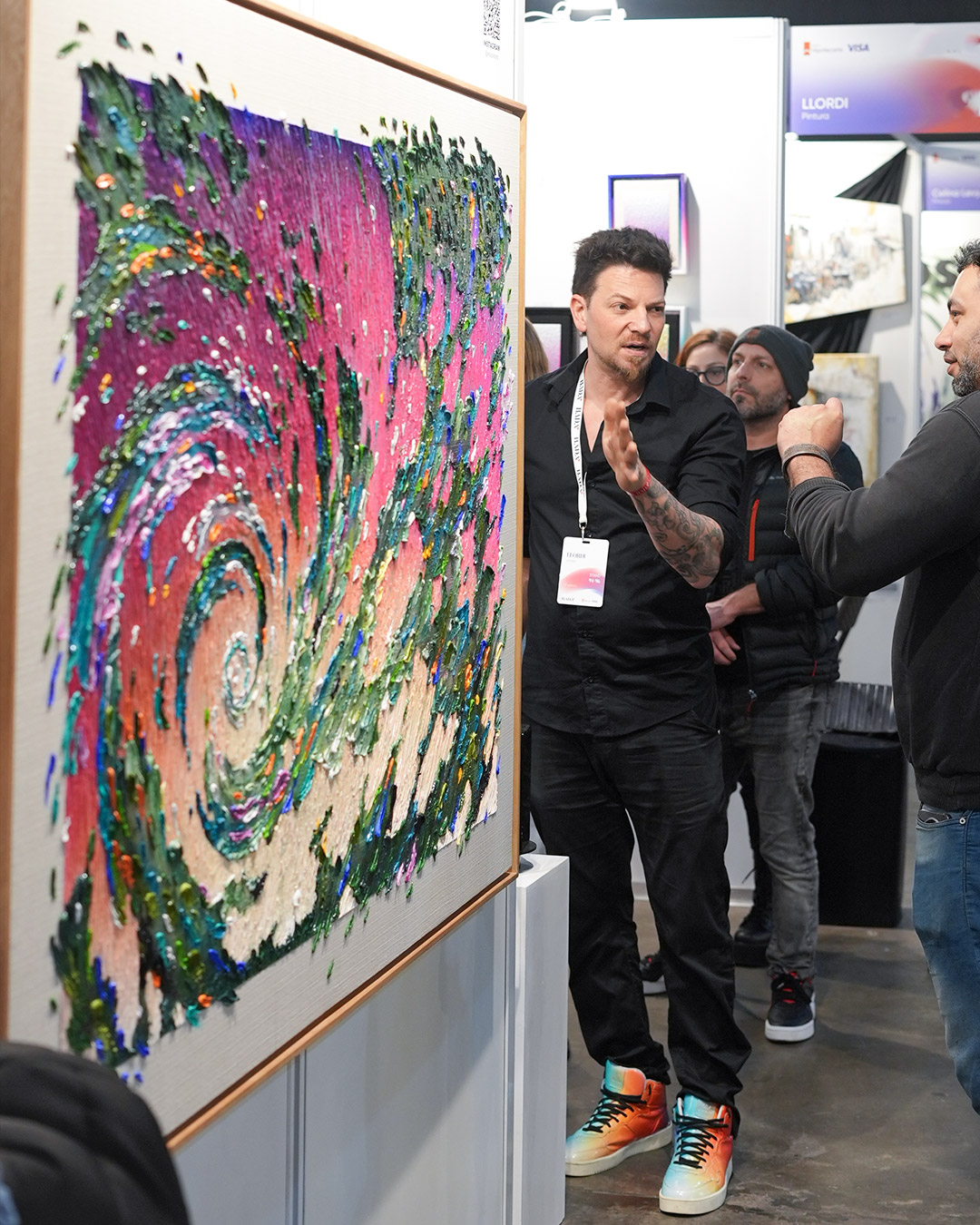
What does it mean for your work to be a “living system”?
Nature is not pure force, but a constant dialogue with whatever interrupts it. Without resistance, there is no form. My works are not static images: I investigate how matter reacts to light and movement. If you don’t move, the work sleeps. It needs your presence to activate its hidden dimensions.
You use the word “play” a lot.
The work acts as a social device, a bridge to primary emotions. Sometimes moving just a little is enough to feel like a child again. The viewer no longer looks: they play. And in doing so they recover, even if only for a moment, the magic of seeing the world for the first time.
Technique
From chance to control
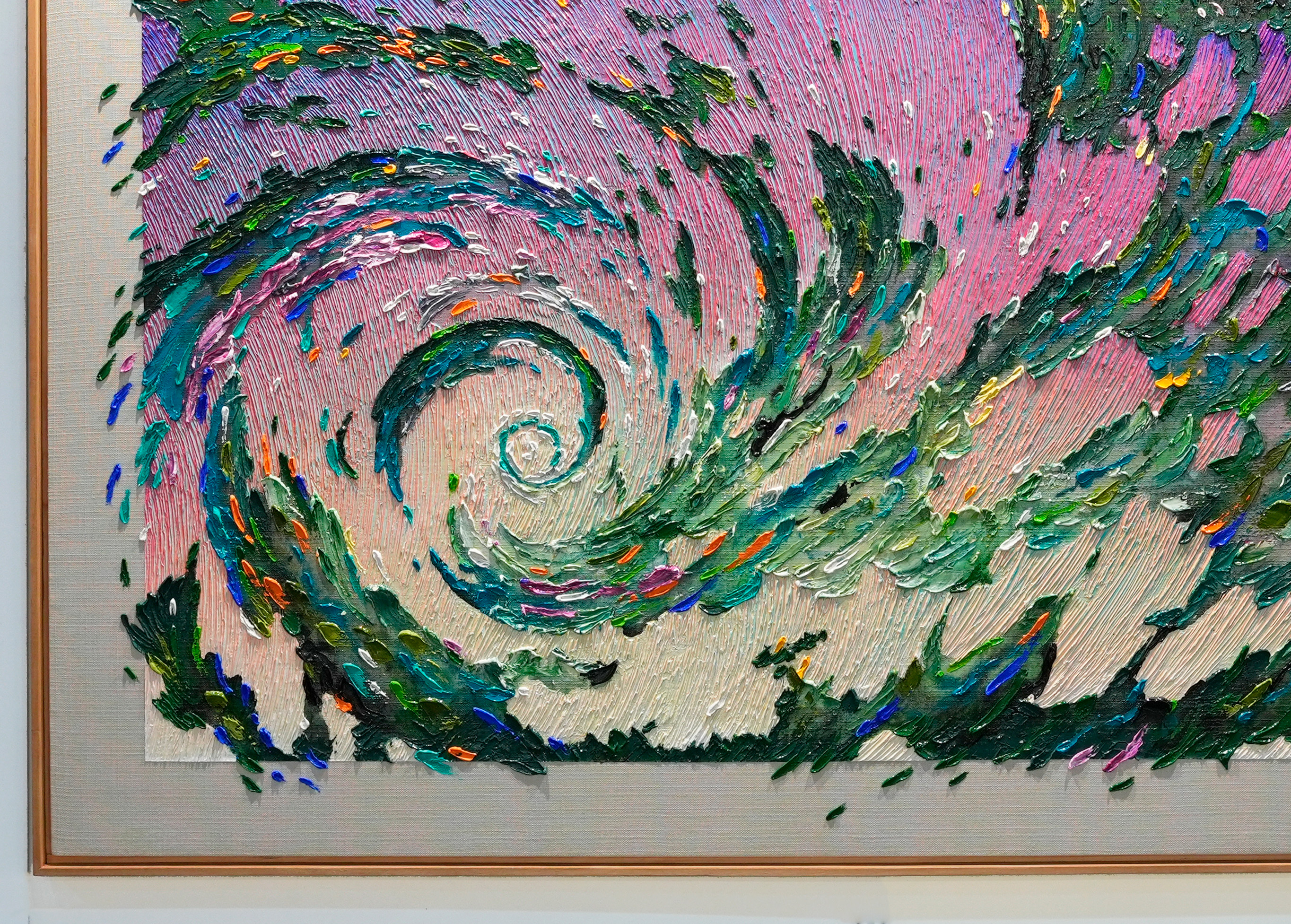
The works are built in layers. First, a base of fluid paint that obeys chance; then, a rigorous intervention with the airbrush. The volumes of the support catch the pigment the way mountain slopes catch the mist, creating micro-shadows and highlights that do not exist in flat painting.
Materials and refraction
Pigments in semi-translucent layers and varnishes with different refractive indices. The controlled layering makes certain tones appear or disappear depending on the light. Looking at the work from the right is not the same as looking at it from the left: color stops being a fixed quality and becomes a phenomenon that moves in real time.